For JCL · NJCL · Regional Certamen
700+ questions spanning Mythology, History, Language, Literature, and Culture — three difficulty levels, instant feedback, and the occasional etymology revelation that makes you say "wait, THAT'S where that word comes from?!"
FREE · No Ads · No In-App Purchases
⚡ Sample Question · Language · Novice
What Latin verb, meaning "to roll," lives on in the name of a famous Swedish car brand? (Hint: you drive one, or at least you know someone who does.)
On the bus. Between classes. Five minutes before practice. Ubicumque, quandōcumque.

One tap. No paywall. No ads pretending to be questions.
Scan with your phone
Tolle, lege. — Take it, read it.
Certamen (Latin for "contest") is a fast-paced, Jeopardy-style academic competition where teams race to answer questions about Latin language, Roman history, mythology, and classical culture.
Organized by the Junior Classical League, it's played at school, regional, state, and national levels — with three divisions: Novice, Intermediate, and Advanced.
The problem? Preparing is hard. Flashcards get boring. Textbooks don't simulate the pressure of a tossup question flying at you at 200 words per minute. CertamenApp does.
Built by Certamen players, for Certamen players.
Six categories — Mythology, History, Language, Literature, Culture, and Living Latin — drawn from real tournament banks and original questions written to JCL standards.
Mythologia · Historia · Lingua · moreNovice, Intermediate, Advanced — each with carefully non-overlapping question pools. No easy question sneaking into your Advanced round. Promise.
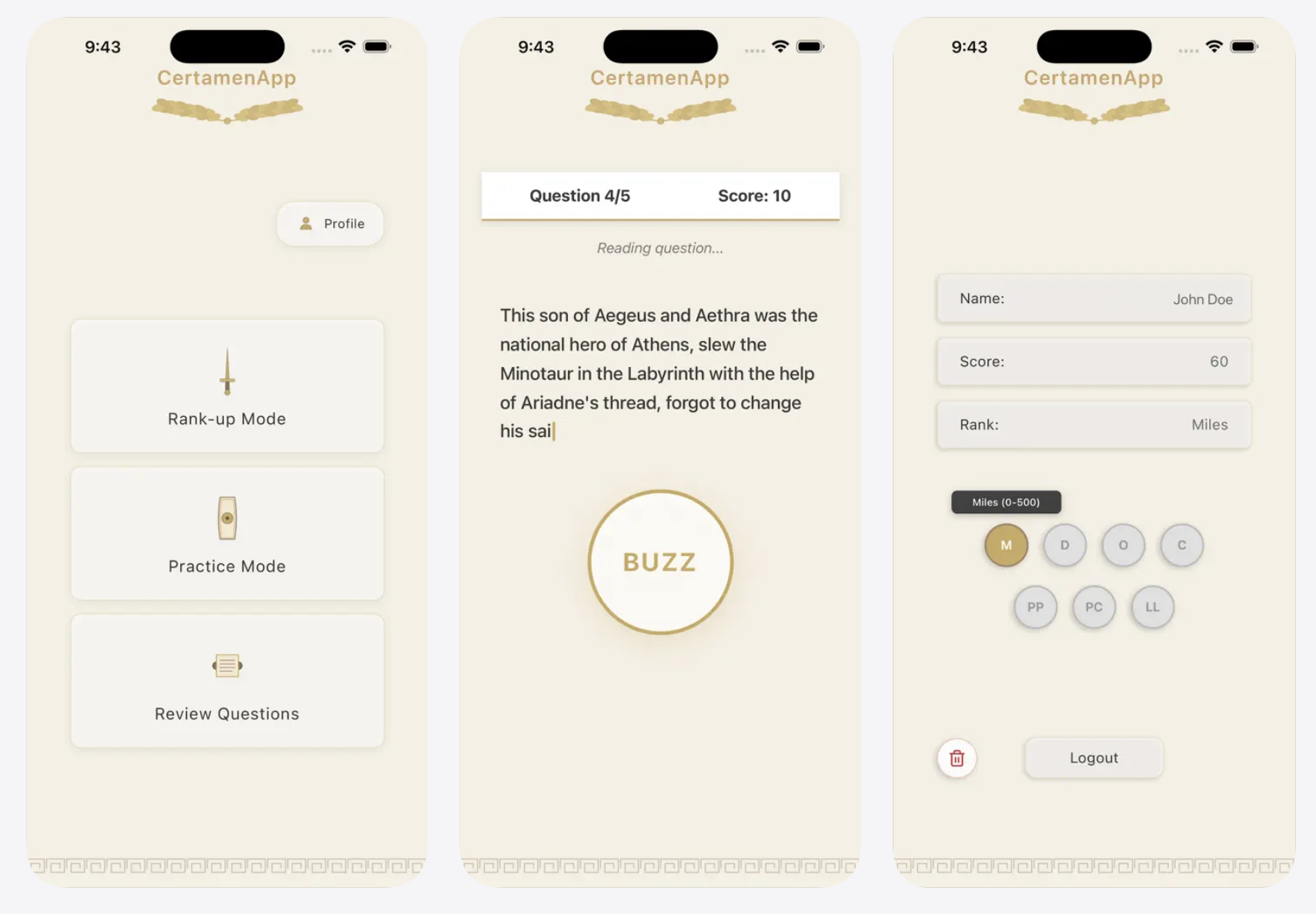
Novice · Intermedius · ProvectusQuestions reveal word by word, just like a real moderator reading. Buzz in early for a bonus — hesitate and your opponent scores. Real competition feel, zero travel required.
Vēnī, vīdī, vīcīEvery language question comes with a "did you know?" moment. Discover that salary comes from sal (salt), that disaster means "bad star," and that you've been speaking Latin your whole life without knowing it.
Origō verbōrumSee your accuracy by category, difficulty, and question type. Know exactly whether you need to grind more mythology tossups or finally learn your Roman emperors in order.
Prōgressus tuusSimulate a full Certamen round with timed tossups and bonus questions. Solo study or team practice — the app adapts. Show up on tournament day knowing you've already seen worse.
Fortis et parātusNo sign-up required. Just you and a question.
Answer
I finally understand why 'pecuniary' is about money — it's from pecus, cattle. Latin is the reason half the English dictionary makes sense.
Our whole team uses it before tournaments. The tossup format actually makes you read faster — and buzz at the right moment, not a second too early.
I went from blanking on mythology tossups to placing second at regionals. The bonus questions are what really got me — you can't just know the hero, you have to know their whole family tree.
Discere means "to learn" in Latin. It also gave us "discipline," "disciple," and the fact that you're already learning just by reading this sentence.